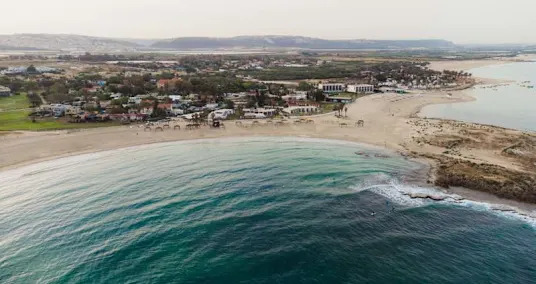
The discovery was made in an ancient shipwreck in the Dor Lagoon near the Carmel Coast, where archaeologists recovered nine pieces of unprocessed iron known as “blooms.”
Researchers from the University of Haifa said Wednesday that an underwater excavation off Israel’s northern Mediterranean coast uncovered what they described as the earliest known cargo of raw iron transported by ship, dating back around 2,600 years, Xinhua reported.
The discovery was made in an ancient shipwreck in the Dor Lagoon near the Carmel Coast, where archaeologists recovered nine pieces of unprocessed iron known as “blooms.” According to the university, the find provides direct evidence of how iron was transported in its earliest commercial stages.
The material was preserved in its original form, having solidified directly in a smelting furnace without undergoing forging or further refinement. Researchers said this distinguishes the cargo from later iron artifacts that typically show signs of shaping or tool-making.
Unlike copper and bronze, which could be melted into liquid form in ancient production processes, iron was heated with charcoal to produce a solid, porous mass. That mass was generally hammered to remove impurities and create denser material suitable for tools and implements.
The recovered blooms showed no indication of that secondary processing stage, suggesting they were transported immediately after production.

Earliest iron shipment discovered in ancient Mediterranean wreck
To determine the age and condition of the cargo, researchers conducted microscopic and chemical analyses.
Radiocarbon dating was also carried out on charred wood embedded in one of the pieces, helping confirm the timeline of the shipment. The findings were published in the journal Heritage Science.
Researchers said the cargo indicates that iron was being moved in raw form from production sites to other locations for further processing, pointing to a level of specialization in ancient manufacturing and trade networks in the Mediterranean.
The University of Haifa said the discovery provides new insight into early iron production and distribution practices in the region.
LATEST POSTS
- 1
 NASA Perseverance rover sees megaripples on Mars | Space photo of the day for Jan. 7, 2026.
 - 2A 'rampaging lion' nebula roars to life in a stunning deep-space photo
- 3Israeli military says it hit dozens of military facilities in Tehran
- 4Bronze Age "City of Seven Ravines" unearthed in central Asia after 3,500 years
- 5One of the best meteor showers of the year peaks at the worst possible time this week





- Building a Flourishing Business: Illustrations from Business people
- Becoming the best at Discussion: Individual Procedures
- Step by step instructions to Pick an Incineration Urn: Variables to Consider
- Germany paves the way for tighter EU asylum rules
- Osteoporosis, the silent disease, can shorten your life − here’s how to prevent fractures and keep bones healthy
- Map shows more than 1,900 measles cases across U.S.
- Cyclone causes blackout, flight chaos in Brazil's Sao Paulo
- The 10 Most Famous Style Minutes on Honorary pathway
- Explosions heard across Tehran after IDF announces wave of strikes on regime terror targets